bolg
  • What Chinese Artists And Sculptors Are You Familiar With?

    What Chinese Artists And Sculptors Are You Familiar With?

    May 20, 2024
    The broad term "sculptor" not only applies to artists, but can also be used in non-artistic fields. For example, it may refer to someone who works on restoration sites or creates reproductions of existing sculptures. If sculptors are also defined as artists, then the objects they create must have an artistic intent behind them. This person can be a professional or an amateur.   Sculpture, like painting, is considered a major artistic discipline. Some sculptors create works exclusively using sculpture as the medium, while other artists take a multi-disciplinary approach.   Sculptors attempt to create three-dimensional forms using one or more media. Sculptors can choose from a variety of materials to create their sculptures. Some of the most commonly used media include stone (such as marble, granite, etc.), concrete, cement, wood, and clay (for ceramic sculptures). Artists may also use metals to create sculptures, with bronze being the most historically common, but sculptors today can also work in aluminum and even steel.   Nowadays, the development of practices and techniques has led to an increasing diversification of materials that sculptors can utilize. As a result, the range of materials used in sculpture has become more extensive. Artworks made from a combination of wood, metal, resin, glass, or various other materials are now quite common. Artists may also employ new technologies like 3D printing to aid in the creation of their works. Throughout the history of sculpture, many different types of sculpture have emerged, and artists have developed various techniques for creating three-dimensional works.   China is the birthplace of contemporary artists, and over the past two decades, visionary artists have been consistently conquering the art market. At times provocative, at times playful, but never lacking in inspiration, the works of Chinese artists continue to surprise us. Here is a list of 6 Chinese artists that you absolutely should know about. Whether they are established or emerging, you don't want to miss their latest creations.   1、Ai Weiwei 《Sunflower Seeds》 Ai Weiwei is one of the most renowned Chinese contemporary artists in the world. His work conveys messages of defiance against the powers that be, for which he has paid a price. Today, Ai Weiwei is in exile in Berlin, continuing his artistic struggle against injustices around the world. Recently, his attention has turned to the fate of refugees using the Mediterranean migration route, imposed upon them by European powers. Ai Weiwei's artistic creations have always revolved around three main themes: social critique, exploration of the human condition, and political struggle. He is adept at utilizing avant-garde artistic forms to deeply examine the various problems in contemporary Chinese society, prompting the public to focus on and reflect upon major issues of power, freedom, culture, and more. He is undoubtedly one of the most controversial but also most influential artists in contemporary China.   2. Xu Bing                                          《A Book from the Sky》   Xu Bing is primarily known for his installation art and performance art. Xu Bing's works often use cultural symbols and language as entry points to criticize certain ingrained ways of thinking and values in traditional Chinese culture. He is skilled at employing techniques like satire and parody to expose the problems of cultural insularity and rigidity. Overall, the core of Xu Bing's works lies in using a unique artistic vocabulary to critique traditional culture, reflect on social realities, and explore linguistic expression, demonstrating his important status as a conceptual art pioneer. His works not only possess a strong critical edge, but also embody the driving force behind the forward progression of contemporary Chinese art.   3、Gu Wenda              《Drama of Two Culture Formats Merge》   Gu Wenda is considered one of the pioneers of installation art and performance art in contemporary Chinese art. He integrates elements of both Eastern and Western cultures, and possesses a pioneering and unique artistic language. He is skilled in experimental mediums such as installation, performance, and video art, with his works often focused on critiquing social realities and reflecting on cultural traditions. Gu Wenda has been invited to participate in numerous important biennales and avant-garde art exhibitions both domestically and internationally. In 2000, he was awarded the prestigious "Lu Xun Art Prize", and is widely recognized as one of the most forward-thinking and experimental artists in the Chinese contemporary art scene. In summary, Gu Wenda has played a pioneering role in the development of Chinese contemporary art. His avant-garde and innovative artistic practices have forged new pathways for Chinese contemporary art, exerting a profound influence on the entire art world. His works, expressed through a distinctive artistic vocabulary, explore major socio-cultural issues, and he enjoys an esteemed status both within China and internationally. 4.Liu Bolin     All of Liu Bolin's photographs contain hidden self-portraits, making him one of the most "unnoticeable" among the most renowned Chinese artists. His interest in camouflage stems from a trend in Chinese society: the neglect of the individual. This was part of the development projects for the 2008 Beijing Olympics. Since then, the artist has expanded his work to all continents, creating pieces in major cities such as China and Brussels. In 2016, he organized a performance in front of the Louvre Pyramid, where he was also disguised by the French artist JR. In 2017, Liu Bolin showcased his talents by collaborating with the Moncler brand for their Spring/Summer collection.  Liu Bolin's artistic practice is primarily focused on painting, integrating elements of traditional Chinese culture and exploring profound issues of human nature and society. His works hold a significant position in the history of Chinese contemporary art and have had a wide-ranging influence on the art world as a whole. He is considered one of the important representative figures in the Chinese contemporary art scene.   5、XuZhen      Xu Zhen is a multi-talented artist and one of the renowned figures in the Chinese contemporary art scene. He has gained such a reputation because, since he began exhibiting, the artist has frequently changed his subject matter and media. His created video works that resemble advertisements or documentaries, traditional ceramics with mutant forms, abstract paintings, figurative murals, and soft textile sculptures are just some examples of his eclecticism.  Overall, Xu Zhen has played a very important role in the history of the development of Chinese contemporary art. His pioneering experimental spirit and innovative artistic language have had a profound influence on the entire Chinese contemporary art world, driving continuous innovation and breakthroughs in artistic forms. His works are held in high regard both domestically and internationally.   6.Wu Weishan     Wu Weishan has always considered the excavation and in-depth study of traditional Chinese culture as his life's mission. He has long been committed to the integration and expression of the Chinese cultural spirit in his sculptural creations, producing hundreds of influential sculptures that have been exhibited worldwide and collected by major museums.  Wu Weishan pioneered the style of Chinese modern freehand sculpture, proposing the theory of "freehand sculpture" and the "Eight Major Styles of Chinese Sculpture," comprehensively summarizing the excellent traditions of Chinese sculpture and guiding the development direction of contemporary Chinese sculptural creation. Since taking up the position of Director of the National Art Museum of China, Wu Weishan has actively integrated the museum's collection resources, greatly promoting the excellent traditional Chinese culture, and dedicated himself to telling the Chinese story through classic works, advancing the global dissemination of contemporary Chinese art, and making important contributions to cultural exchange between China and the world.  These artists have all made outstanding contributions in their respective fields, becoming important representatives of contemporary Chinese art. Their work is just the tip of the iceberg in the Chinese contemporary art scene. Through the works of these artists, we can see that Chinese contemporary art is marching towards broader horizons, making unique contributions to the development of world art. We welcome custom designs that will create the beauty of art that is unique to you. sculpture supplier Tiancai        
  • Can Fiberglass Electroplating Replace Metal Stainless Steel Sculptures In 2024?

    Can Fiberglass Electroplating Replace Metal Stainless Steel Sculptures In 2024?

    Apr 25, 2024
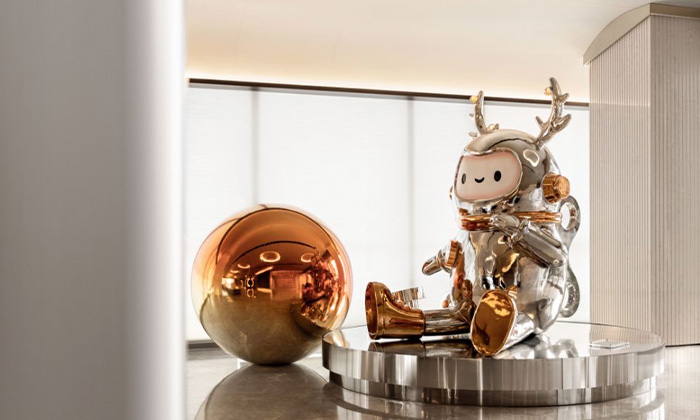
    With the continuous progress and innovation of, fiberglass reinforced plastic (FRP) electroplating, as a novel composite material, has demonstrated enormous potential in the field of sculpture today. In the year 2024, can FRP electroplating be considered as a substitute for stainless steel in sculpture, and potentially replace it? Below, we will analyze it from the following points. 1、Material FRP plating: FRP, also known as reinforced plastic, is a composite material composed of glass fiber and resin (usually polyester resin). The surface is electroplated to give it its metallic finish. It is lightweight, corrosion resistant and electrically insulating. Metal stainless steel: Metal stainless steel is an alloy material, mainly composed of iron, chromium and a small amount of other elements (such as nickel, molybdenum, etc.), with high strength, corrosion resistance and metallic texture. 2、Exterior FRP plating: Through surface electroplating treatment, it acquires a metallic appearance, typically displaying a smooth and glossy surface with good luster and vibrant colors. It can showcase rich textures and details while also possessing a certain degree of transparency. Metal stainless steel:The appearance tends to be more stable and solid. It has a smooth metal surface and strong ability to reflect light, giving people an elegant and solid impression. At the same time, it can also present various forms and textures according to the designer's intention, showing different aesthetic effects. 3、Cost FRP plating:The cost is relatively low, the production process is relatively simple, and it is suitable for mass production. Metal stainless steel:The cost is higher due to higher material and processing requirements, but has a longer service life and wider application range. 4、Applicable location FRP plating:Generally used indoors, it should not be exposed to high temperatures for an extended period. It lacks strong corrosion resistance, so if it needs to be placed in outdoor or other special environments, additional protective measures may be required. Metal stainless steel:Suitable for various places, stainless steel has excellent corrosion resistance and weather resistance, and is suitable for indoor and outdoor environments, especially places with high corrosion resistance. 5、Construction period FRP plating:The process is relatively simple, with steps such as foam engraving, fiberglass mold turning, surface polishing, decolorization, and electroplating, etc., and the construction period is relatively short. Metal stainless steel:It involves processes such as engraving foam, cutting, welding, and polishing, and the construction period is relatively long. 6、Later maintenance FRP plating:Clean regularly to prevent scratches, impacts, sun exposure and strong acid and alkali. If it is damaged later, repairs may be limited, and the repair process may affect the integrity and texture of its external electroplating layer. Metal stainless steel:Regular cleaning, rust removal, impact prevention, and surface protection. In summary:As technology continues to advance and innovate, fiberglass electroplating sculptures cannot completely replace stainless steel sculptures. We need to consider factors such as different application environments, costs, and personal aesthetics. If high strength and corrosion resistance are required in environments that prioritize malleability and design freedom, such as garden sculptures or seaside sculptures, it is recommended to use stainless steel. For situations that require lightweight, cost-effectiveness, and a focus on metallic appearance and electrical insulation performance, such as indoor mall sculptures or public space art sculptures, fiberglass electroplating is recommended. If you have further questions regarding fiberglass electroplating and stainless steel sculptures, please feel free to contact us. We have professional staff who can recommend suitable sculpture materials based on your specific requirements. Welcome to customize the pictures and create your own artistic beauty. Sculpture Supplier Tiancai
  • How To Choose Raw Materials For Stainless Steel Sculptures

    How To Choose Raw Materials For Stainless Steel Sculptures

    Jul 24, 2023
    Do You Know The Difference Between Stainless Steel 304 And 316? 1.What are the commonly used stainless steel models? 304;316;430;201;904L 2.What are the performance characteristics of these commonly used stainless steels and where are they suitable? 1. 304 stainless steel: It has good corrosion resistance and processing performance, and is widely used in food processing, kitchenware, chemical equipment and other fields. 2. 316 stainless steel: It has higher corrosion resistance and is especially suitable for marine environment and chemical industry. It is often used in ship structure, marine equipment, chemical pipelines, etc. 3. 430 stainless steel: It has high wear resistance and heat resistance, and is often used in stainless steel tableware, furniture, automobile exhaust pipes, etc. 4. 201 stainless steel: It has good strength and corrosion resistance and is often used in decorative materials, building structures, household items, etc. 5. 904L stainless steel: It has extremely high corrosion resistance and corrosion resistance. It is suitable for extremely corrosive environments, such as sulfuric acid, salt water, etc., and is often used in chemical industry, petroleum, medical equipment, etc. 3. Let’s talk about the two most commonly used stainless steels in Metal Sculptures, 304 and 316. The main component content of stainless steel 304: Chromium (Cr): 18.00% - 20.00% Nickel (Ni): 8.00% - 10.50% The 304 stainless steel exhibits a glossy appearance, with a polished brightness that can reach up to a mirrored 6K finish. It possesses a certain level of oxidation resistance, enabling it to maintain both a visually appealing appearance and durability. Additionally, it demonstrates excellent corrosion resistance and processability. It finds extensive usage in Stainless Steel Sculptures, particularly in Indoor Sculptures, Ornaments And Small Sculptures The main component content of stainless steel  316: Chromium (Cr): 16.00% - 18.00% Nickel (Ni): 10.00% - 14.00% Molybdenum (Mo): 2.00% - 3.00% 316 stainless steel is a stainless steel material with superior corrosion resistance, achieving a polished brightness of up to mirror 8K. It is particularly suitable for sculptural works in outdoor and humid environments. It is widely chosen for Metal Stainless Steel Sculptures and frequently used in Public Art Installations, Garden Sculptures, And Sculptures In Coastal Areas. 316 stainless steel is capable of withstanding corrosion from seawater and chloride intrusion, exhibiting excellent durability and antioxidation properties. 4.The selection of a specific stainless steel grade should be carefully considered, taking into account the design requirements, environmental conditions, and budget of the sculpture. In certain special circumstances, alternative stainless steel grades such as 316L or 201 may also be chosen to meet specific demands. 5.In summary, stainless steel sculptures of different types and grades produce varying effects. If you have any questions about sculpture materials, please feel free to contact us. Our professional staff can recommend the appropriate stainless steel raw materials based on your specific requirements and the differences between 304 and 316 stainless steel. We welcome custom designs that will create the beauty of art that is unique to you. sculpture supplier Tiancai
1 2 3

A total of3pages

Need Help? Chat with us

Leave A Message
If you are interested in our products and want to know more details,please leave a message here,we will reply you as soon as we can.
Submit
Contact us #
+8615361469787

Our hours

Mon - Fri :9 AM - 7PM

Sat  - Sun:10 AM - 5 PM

(all hours are beijing Time)

Home

Products

whatsApp

contact